
Your Small Business Website is your Best Sales Tool
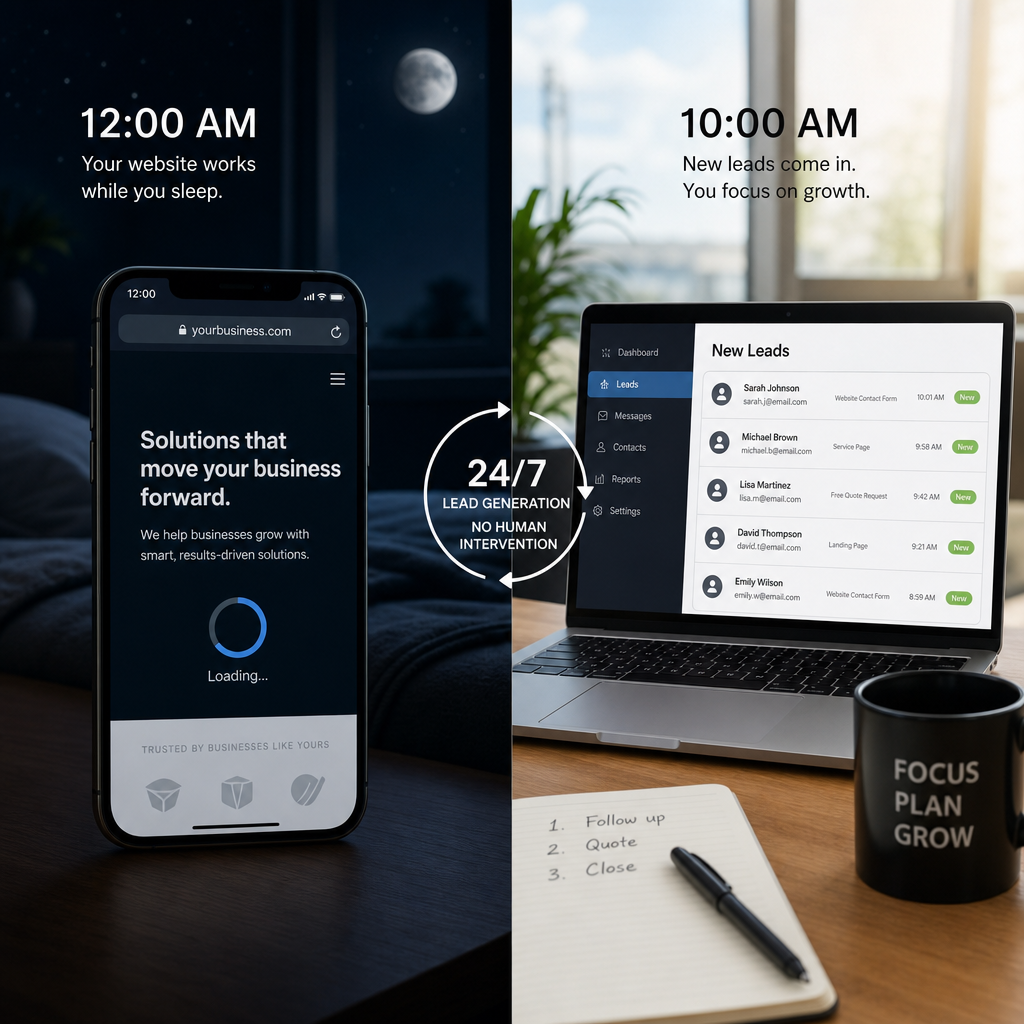
Most small business owners treat their website like a digital business card. They build it once, forget about it, and then wonder why leads are not coming in. The reality is that a well-built small business website is not a passive placeholder. It is your hardest-working sales representative, available every hour of every day, asking for no commission and never calling in sick. According to Stanford Web Credibility Research, 75% of consumers admit to judging a company's credibility based on its website design alone. That number should stop you cold if your site has not been updated in the last two years.
Table of Contents
Converting Visitors Into Customers Requires Intentional Design
DIY Website Builders vs. Professional Web Design: A Clear Comparison
Quick Takeaways
Key Insight | Explanation |
|---|---|
Your website is a 24/7 sales asset | Unlike staff, your site never sleeps. Prospects research you at midnight, on weekends, and during holidays. A site optimized for conversion works for you even when you are not. |
Page load speed directly affects revenue | Google data shows that a one-second delay in mobile page load can reduce conversions by up to 20%. Slow sites bleed sales silently. |
Local SEO is the fastest win for small businesses | Optimizing for location-based searches like "web design Gold Beach Oregon" puts you in front of high-intent local buyers who are ready to spend money now. |
Design credibility builds buying trust | A professionally designed site signals that you take your business seriously. An outdated or template-heavy site signals the opposite, regardless of how good your product is. |
Clear calls-to-action multiply inquiries | HubSpot data shows that personalized and specific CTAs convert 202% better than generic ones. Vague "Contact Us" buttons underperform dramatically. |
Content answers buyer questions before they ask | Buyers research before they call. A site with thorough service pages and targeted FAQs removes friction and accelerates the decision to reach out. |
Mobile performance is non-negotiable | Over 60% of web traffic now comes from mobile devices. A site that breaks on a phone is a site that loses customers to your competitors. |
Your Website Works as a Sales Tool Around the Clock
A traditional sales process depends on people. A salesperson has to be available, alert, and on-script. Your website as a sales tool operates without any of those constraints. It loads your pitch, showcases your portfolio, answers objections, and funnels visitors toward a purchase decision at any hour without fatigue.
The businesses that understand this treat their website as infrastructure rather than an expense. They invest in it the way they invest in staff training or inventory, because the return compounds over time. A page that ranks on Google and converts visitors does not cost more to serve the 500th lead than it did to serve the first.
In practice, the difference between a website that generates leads and one that does not almost always comes down to intentionality. Sites built with a clear understanding of who the visitor is, what they need, and what action they should take next outperform template-drop sites by a wide margin. The tool has to be built for purpose, not just for presence.

First Impressions and Credibility Are Made in Seconds
Research from the Missouri University of Science and Technology found that users form a first impression of a website in about 0.2 seconds, and it takes about 2.6 seconds for their eyes to settle on the elements that most influence that impression. Your header, your headline, and your visual design do the heavy lifting before a single word is actually read.
This is where many small businesses make a costly mistake. They choose a cheap or free website template, slap their logo on it, and call it done. The visitor sees a site that looks like dozens of others and immediately questions whether the business is serious, established, or worth trusting with their money.
What Visual Credibility Actually Requires
Professional credibility online is built through several overlapping signals. Typography that is clean and readable, photography that is original rather than stock-generic, and a color palette that reflects the brand all contribute. But the most important signal is consistency. A site where the fonts change between pages, or where the tone of the copy shifts wildly, communicates disorganization even if the individual elements are attractive.
For small businesses competing against larger brands with bigger budgets, this matters even more. A professionally designed site narrows the perceived gap. A sloppy one widens it instantly.
"It takes about 50 milliseconds for users to form an opinion about your website that determines whether they'll stay or leave." - Behaviour and Information Technology journal, cited by Peep Laja, CXL Institute
SEO Drives Qualified Traffic Without Paid Ads
Paid advertising stops the moment you stop paying. Search engine optimization, done correctly, builds an asset that continues to deliver traffic long after the initial work is complete. For a small business with a limited marketing budget, this distinction is critical.
The data consistently shows that organic search delivers higher-intent visitors than most other channels. Someone who types "small business web design" into Google is actively looking for a solution. They are not scrolling past an ad. They are searching with purpose. Ranking for those terms means meeting buyers precisely when they are ready to make a decision.
On-Page and Technical SEO Are Both Required
A common mistake is treating SEO as only a content problem. In practice, technical performance matters just as much. A site that loads slowly, lacks proper mobile responsiveness, or has crawl errors will not rank well regardless of how strong the content is. Google evaluates both the quality of information and the quality of the experience it delivers.
Pro tip: Run your current site through Google's PageSpeed Insights. If your mobile performance score is below 70, fixing that single issue is likely to produce more ranking improvement than publishing ten new blog posts.
At High Plains Webmaster, the sites we build are structured from the ground up for search performance. That means clean code, proper heading hierarchy, optimized images, and structured data markup. These are not afterthoughts. They are built into the architecture before a single piece of content goes live.
Web Design in Gold Beach Oregon: Local Visibility Matters
For businesses operating in specific geographic markets, local SEO is one of the highest-return investments available. Web design Gold Beach Oregon is not just a keyword. It represents a category of buyer who is physically nearby, ready to work with someone local, and actively searching for a service they need now.
Local search behavior is distinct from general search. According to Google, 76% of people who search for something nearby on their smartphone visit a related business within a day. And 28% of those searches result in a purchase. These are not casual browsers. These are motivated buyers, and a locally optimized website is what puts you in front of them.
What Local Optimization Includes for Small Business Websites
Effective local visibility requires more than mentioning your city name on the homepage. It includes consistent NAP (name, address, phone number) information across the site and all directories, locally relevant content that addresses community-specific needs, and a properly structured Google Business Profile connected to a well-optimized site.
For businesses on the Oregon coast, including the Curry County area, the competitive landscape is often more approachable than in major metros. That means a properly built site can achieve strong local rankings without the massive authority-building effort required in larger markets. The opportunity is real, but only for businesses whose websites are built to take advantage of it.
Pro tip: Add a dedicated location page to your site that names the specific communities you serve, describes the type of work you do there, and includes a local phone number. This single page can capture a significant share of nearby search traffic that your homepage alone will miss.
Converting Visitors Into Customers Requires Intentional Design
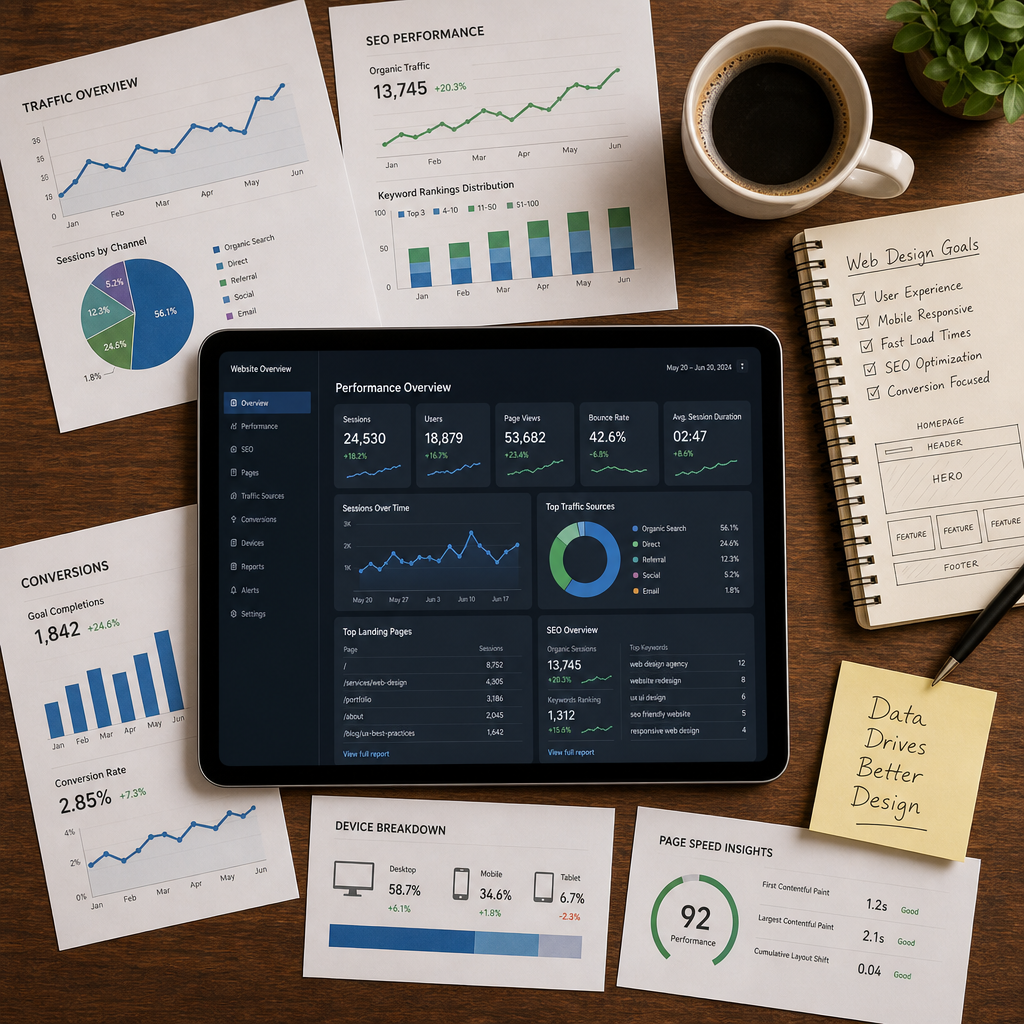
Getting traffic to your site is only half the equation. A site that attracts visitors but fails to convert them into inquiries or customers is still a failing sales tool. Conversion rate optimization is the discipline of closing that gap, and it is where most small business websites fall short.
The mechanics of conversion are specific. Visitors need a clear value proposition above the fold, meaning they should understand what you do and why it matters to them within the first few seconds of landing. They need social proof in the form of real reviews, named testimonials, or case studies. And they need a direct, specific call to action that tells them exactly what to do next.
The Anatomy of a High-Converting Page
A well-converting service page includes a headline that speaks to the buyer's problem, not just the service name. It includes specific outcomes the customer can expect. It addresses the most common objections with clear, confident answers. And it ends with a call to action that creates a low-friction next step, whether that is a phone call, a form submission, or a free consultation request.
Generic sites built on platforms like Wix, Weebly, or GoDaddy's website builder give you the ability to publish pages. They do not give you the strategic structure that turns those pages into sales assets. The template does not know your customer. Only a purpose-built site can do that job properly.
DIY Website Builders vs. Professional Web Design: A Clear Comparison
The question of whether to use a DIY platform or hire a professional agency is one many small business owners face. The answer depends on what you actually need from your site. Here is a direct comparison:
Factor | DIY Platforms (Wix, Weebly, GoDaddy) | Professional Web Design (High Plains Webmaster) |
|---|---|---|
Upfront cost | Low monthly subscription, but ongoing fees add up | Higher upfront investment, lower long-term cost per lead |
SEO performance | Limited technical control, restricted schema markup, slower load times | Full technical SEO architecture built in from the start |
Conversion optimization | Generic templates not designed for your specific buyer journey | Strategically designed pages built around your actual customers |
Local search visibility | Basic or absent, requires manual workarounds | Local SEO integrated into site structure and content from day one |
Scalability | Platform restrictions limit what you can build as you grow | Built to scale with your business without platform limitations |
Ownership and control | You rent the platform, not the site. If pricing changes, you are stuck | You own the site outright, with full control over hosting and code |
The data consistently shows that professionally built websites outperform DIY platforms on the metrics that matter to revenue: organic traffic, conversion rates, and time-on-site. For businesses that depend on their website to generate leads, cutting corners on design is cutting corners on sales.
Common Mistakes That Are Costing You Sales Right Now
Most small business websites that underperform do so for predictable, fixable reasons. Identifying the specific problem is the first step to fixing it.
No Clear Value Proposition on the Homepage
A common mistake is writing a homepage that describes what you do without stating why a customer should choose you over every other option. "We are a family-owned plumbing company" tells me what you are. It does not tell me why your work is better, faster, or more reliable than the competitor I just looked at. Your value proposition needs to be explicit and positioned prominently.
Missing or Weak Calls to Action
If a visitor has to hunt for a way to contact you, most of them will not bother. Every major page on your site should have a specific next step, and that step should be obvious. A phone number in the header, a form on the service page, and a clear button labeled something specific like "Request a Free Quote" are the minimum. "Learn More" is not a call to action. It is a missed opportunity.
No Social Proof or Trust Signals
Trust signals include customer reviews, recognizable certifications, years in business, client logos, and before-and-after results. Without them, a visitor has no independent confirmation that you deliver what you promise. According to BrightLocal's research, 98% of consumers read online reviews before making a local purchase decision. Your website needs to surface that proof prominently, not bury it on a separate testimonials page that most visitors never find.
At High Plains Webmaster, we audit every client site for these exact failure points before we begin redesign work. Fixing them consistently moves the needle on both traffic and conversion within the first 90 days.
Frequently Asked Questions
How much does a small business website cost to build professionally?
The cost of a professionally built small business website varies based on the number of pages, the complexity of functionality, and the level of SEO integration required. Most small business projects fall in the range of $2,500 to $10,000 for the initial build. This is significantly higher than a DIY platform subscription, but the performance difference in organic traffic and lead conversion typically delivers a faster return on investment. A site that generates two additional customers per month quickly offsets the design cost.
How long does it take to see results from a new website?
For SEO-driven organic traffic, the standard timeline is three to six months before significant ranking movement is visible. Technical improvements and better on-page structure can produce faster results, but search engines need time to re-crawl and re-index your site. Conversion improvements from better design and clearer calls to action can produce results within days of launch, especially if you are already receiving traffic.
Does my small business really need a website if I have a Facebook page?
Yes, without question. A Facebook page means you are building your business on rented land. Meta can change the algorithm, restrict your reach, or shut down your account at any time. You own none of that. A website is an asset you control completely. It also performs in Google search, which Facebook does not. Over 90% of online experiences begin with a search engine, not a social media platform.
What makes a website actually convert visitors into customers?
Conversion comes from the combination of a clear value proposition, specific social proof, and a direct call to action. Beyond that, the user experience matters. If the site is slow, hard to navigate on mobile, or buries important information in dense paragraphs, visitors will leave before they ever reach a form or phone number. Conversion is a design problem as much as a content problem, and both need to be solved together.
Why is local SEO important for small businesses in specific areas like Gold Beach Oregon?
Local SEO is important because it targets buyers based on physical proximity and immediate intent. Someone searching for a service in Gold Beach Oregon is not browsing. They are looking to hire someone. Ranking for local search terms puts your business in front of those buyers at the exact moment they are ready to make a decision. For businesses in smaller markets, local SEO is often the single most cost-effective marketing strategy available because the competition for those terms is lower than in major urban markets.
How often should a small business website be updated?
Content should be reviewed and updated at minimum every six months. Service pages should reflect your current offerings and pricing. Blog or resource content should be added regularly if you are pursuing an SEO strategy. On the technical side, your CMS, plugins, and security certificates need to be maintained on an ongoing basis. A site that was perfectly built in 2020 but never touched since is now underperforming in both search and user experience. Maintenance is not optional for a site that is expected to generate revenue.
What has been the biggest obstacle your small business has faced in getting your website to actually generate leads, and what approach helped you move past it?